---
updatedAt: 2026-10-02T14:02:29.000Z
agentTools:
projectIndex: https://apidoc.factorialhr.com/llms.txt
---
# Company Token
A Company Token provides company-wide access to Factorial data. All actions are performed on behalf of the company, not a specific user.
# Create the OAuth Application
A Factorial admin creates and manages OAuth applications in **Settings → Advanced configuration → OAuth applications**.
> **➡️****Open OAuth applications in Factorial**
1. In Factorial, open **Settings**.
2. Under **Advanced configuration**, select **OAuth applications**.
3. Select **Create OAuth app**.
4. Enter the **application name**, one **redirect URI** per line, and the **scopes** the integration needs. To test with Postman, use one of these redirect URIs:
* Postman in browser: `https://oauth.pstmn.io/v1/browser-callback`
* Postman desktop: `https://oauth.pstmn.io/v1/callback`
> If you have doubts about which scopes to apply, you can contact Factorial support.
5. Choose the client type:
* **Confidential client with secret** if the application can store a client secret securely on a server.
* **Public client without secret** for browser, desktop, or mobile applications that cannot keep a secret.
6. Select **Save**.
After saving, the OAuth applications page shows the application name, client ID, scopes, and redirect URIs.
## Choose the client type
* **Confidential clients** run on a trusted backend and can keep a client secret private. They authenticate with that secret when exchanging an authorization code for tokens.
* **Non-confidential (public) clients** run in environments where a secret cannot be protected, such as browser SPAs, mobile apps, or desktop apps. A client secret would be extractable, so it must not be relied on for authentication.
### Public clients should use Authorization Code + PKCE
1. Generate a random `code_verifier` locally.
2. Derive a `code_challenge` from it and send that with the authorization request.
3. Keep the verifier only in the client.
4. Send the original verifier when exchanging the returned code for tokens.
## Save Client ID and Client Secret
1. The **Client ID** is always visible in the OAuth applications list.
2. A **client secret** is created only for a **Confidential client with secret**. Copy it when it is shown and store it securely.
3. Verify the redirect URIs and scopes are saved correctly.
### **Save and rotate the client secret**
If the secret is lost or exposed, open the application in **OAuth applications** and use **Rotate client secret**, then update the secret in your integration.
## Start the authorization request
The OAuth applications page does not start authorization for you. After creating the application, your integration must send the **company administrator** to the Factorial ID authorization endpoint. For a company-owned flow, use the application's client ID and registered redirect URI, and add `resource_owner_type=company`:
```
https://id.factorialhr.com/oauth/authorize?client_id=&redirect_uri=&response_type=code&scope=&state=&resource_owner_type=company
```
For demo, use `https://id.eu2.demo.factorial.dev/oauth/authorize` with the same parameters.
> **Public clients (PKCE):** also add `&code_challenge=&code_challenge_method=S256`, where `code_challenge` is derived from the `code_verifier` your client generated and kept locally.
1. The administrator signs in to Factorial, reviews the requested scopes, and authorizes the application.
2. Factorial then redirects to the registered redirect URI with the authorization code.
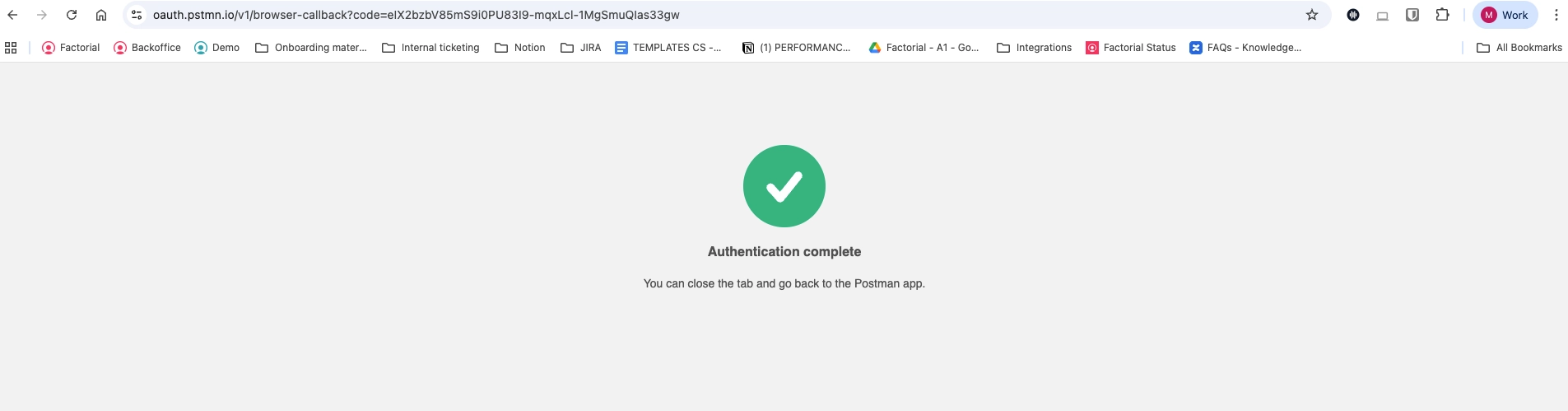
3. The URL of that page contains your Authorization Code. For example:

```
https://oauth.pstmn.io/v1/browser-callback?code=elX2bzbV85mS90PU8319-mqxLcl-1MgSmuQlas33gw
```
In this example, the code is: `elX2bzbV85mS90PU8319-mqxLcl-1MgSmuQlas33gw`. If you sent a `state` value, check that the one returned matches it.
## Exchange Code for Access Token
Use Postman to request the token.
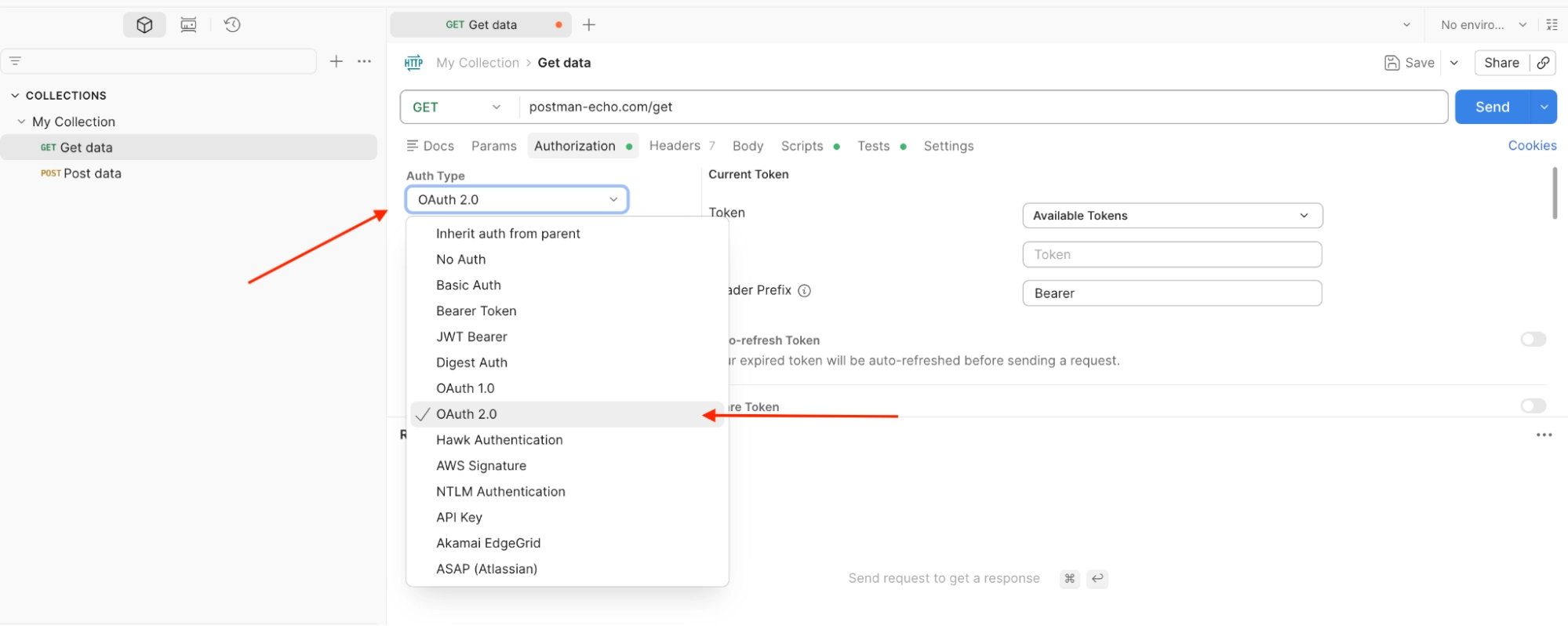
1. In Postman, go to **My Collection → Get data → Authorization**.
2. Set the **Auth Type** to `OAuth 2.0`.
3. Fill in the **Configure New Token** section with the following Factorial ID values:
| Field | Production | Demo |
| -------------------- | ---------------------------------------------- | --------------------------------------------------- |
| **Auth URL** | `https://id.factorialhr.com/oauth/authorize` | `https://id.eu2.demo.factorial.dev/oauth/authorize` |
| **Access Token URL** | `https://id.factorialhr.com/api/oauth/token` | `https://id.eu2.demo.factorial.dev/api/oauth/token` |
| **Client ID** | Your Client ID from the application | Your Client ID from the application |
| **Client Secret** | Your Client Secret (confidential clients only) | Your Client Secret (confidential clients only) |
> For a **Public client without secret**, set **Grant Type** to `Authorization Code (With PKCE)` and leave **Client Secret** empty. Postman generates the `code_verifier` and `code_challenge` for you.
4. Scroll down to **Auth Request** and add a query parameter:
* **Key:** `code`
* **Value:** Your Authorization Code from the previous step
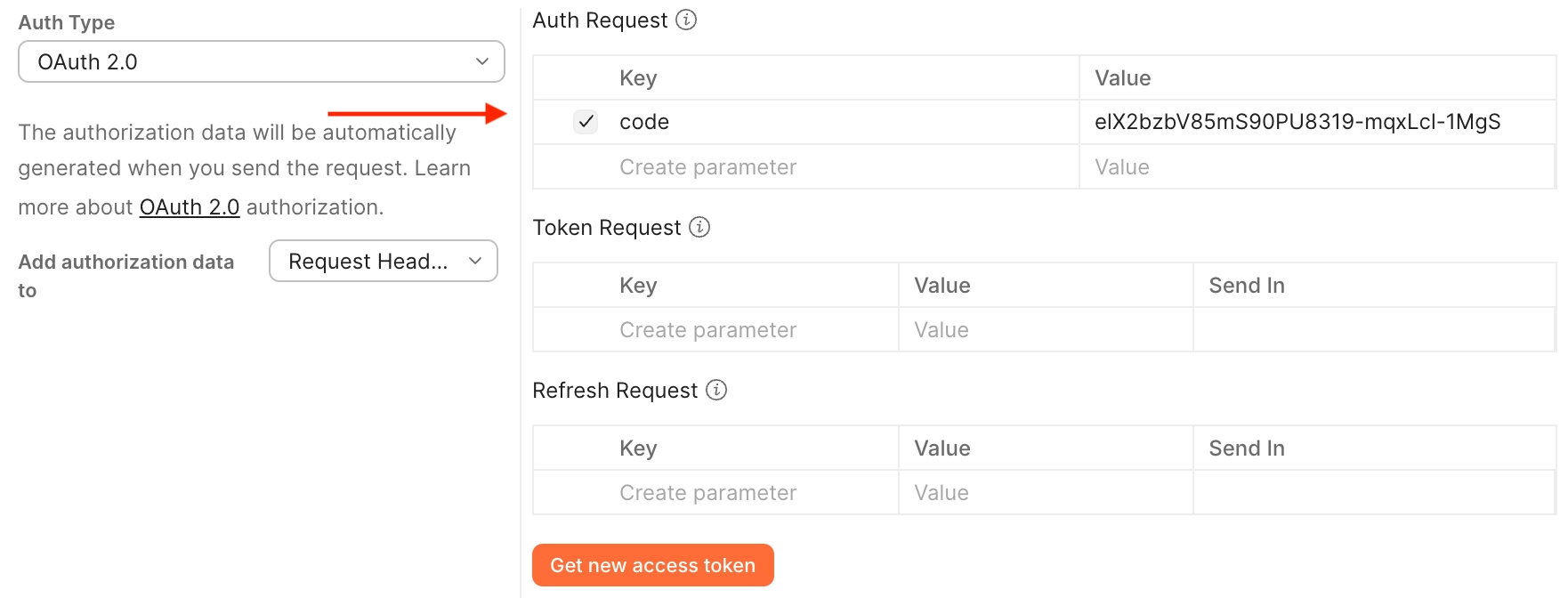
5. Click the orange **"Get new access token"** button.
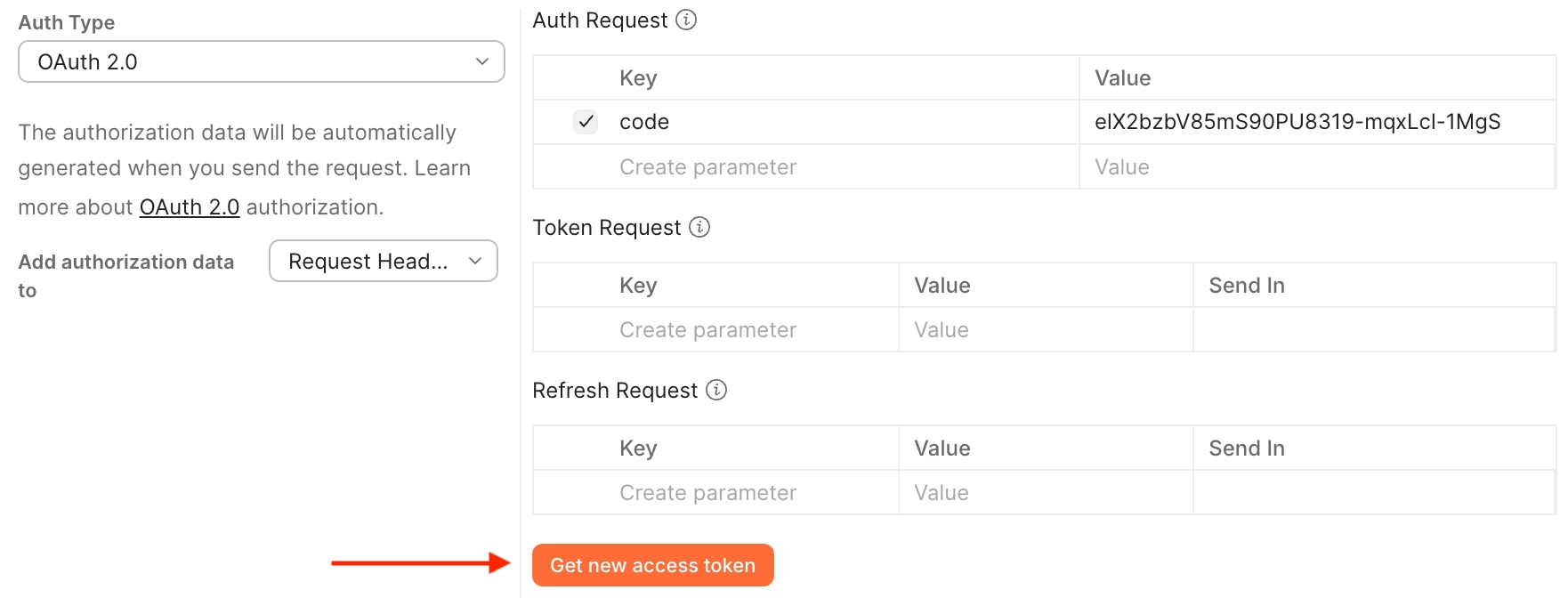
6. In the pop-up window, sign in to Factorial if needed, review the requested scopes, and click **"Authorize"**.
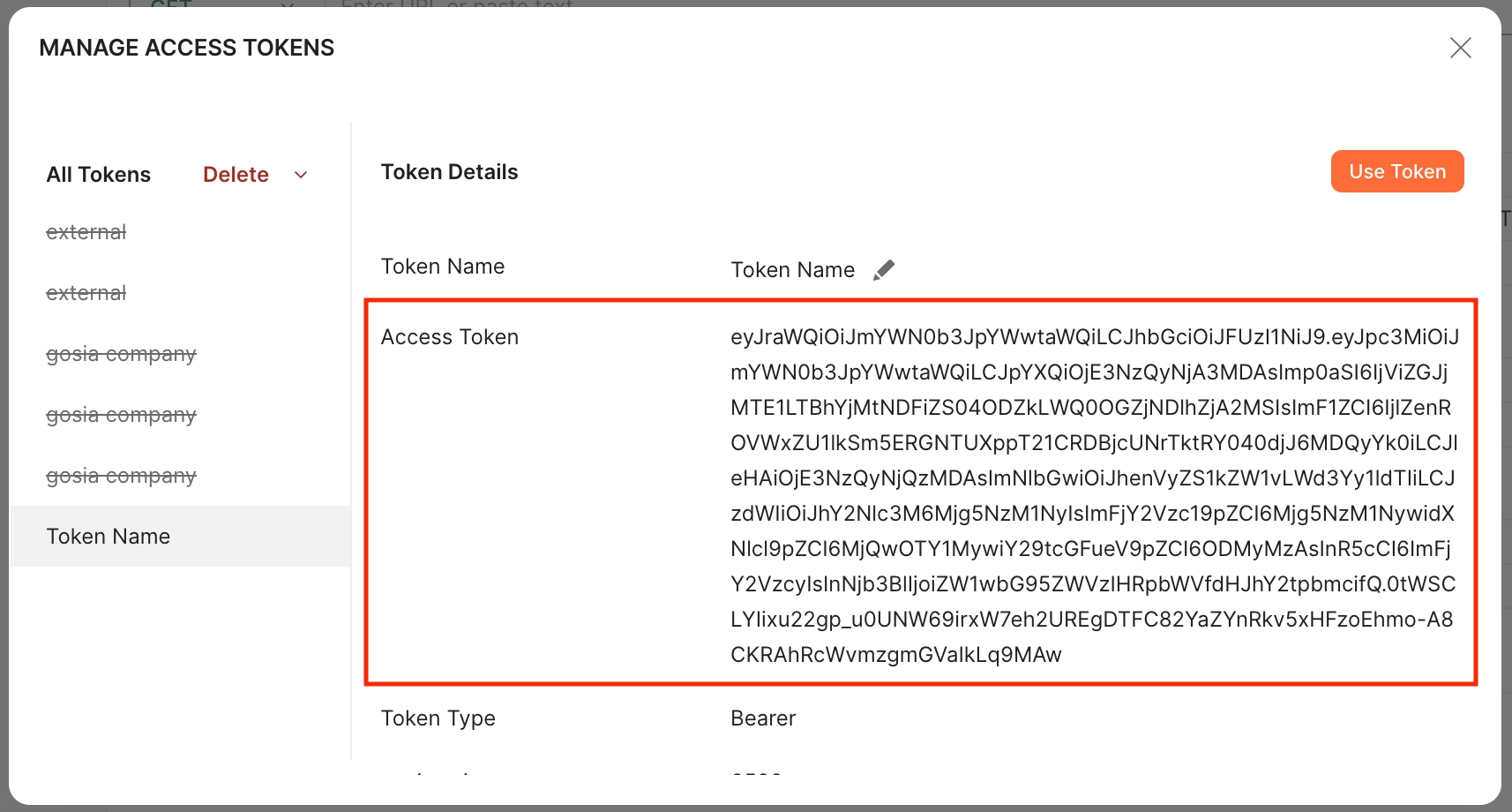
7. After authorization, a pop-up in Postman will return your **Access Token**.
### Existing integrations
Existing integrations can keep their current endpoints while they are migrated to the Factorial ID endpoints.
## Exchange the code without Postman
Send a `POST` request to the Factorial ID token endpoint.
**Confidential client**
```bash
curl -X POST 'https://id.factorialhr.com/api/oauth/token' \
-d 'client_id=' \
-d 'client_secret=' \
-d 'code=' \
-d 'redirect_uri=' \
-d 'grant_type=authorization_code'
```
**Public client (PKCE)**: do not send a client secret; send the original `code_verifier` instead.
```bash
curl -X POST 'https://id.factorialhr.com/api/oauth/token' \
-d 'client_id=' \
-d 'code=' \
-d 'redirect_uri=' \
-d 'code_verifier=' \
-d 'grant_type=authorization_code'
```
For demo, use `https://id.eu2.demo.factorial.dev/api/oauth/token`.
### **Success!** You now have a Company Token.
## Video walkthrough
### **Company Token Expiry:** Company access tokens expire after **1 hour**. Save the `refresh_token` to request new access tokens without re-authorizing.
# Refreshing Access Token
Company access tokens are valid for one hour. After this period has expired, request a new access token with a `POST` request to the Factorial ID token endpoint, providing the refresh token that came with the previous access token.
### **Note**
Non-admin users can perform this action as long as they have the refresh token provided at time of first authentication.
### **Refresh-token lifetime**
Store the refresh token securely and use it to obtain a new access token. If refresh fails because the token or grant is no longer valid, start the authorization flow again.
| Action | Production endpoint | Demo endpoint |
| ------------------------ | --------------------------------------------- | ---------------------------------------------------- |
| **Refresh access token** | `https://id.factorialhr.com/api/oauth/token` | `https://id.eu2.demo.factorial.dev/api/oauth/token` |
| **Revoke token** | `https://id.factorialhr.com/api/oauth/revoke` | `https://id.eu2.demo.factorial.dev/api/oauth/revoke` |
```bash
curl -X POST 'https://id.factorialhr.com/api/oauth/token' -d 'client_id=&client_secret=&refresh_token=&grant_type=refresh_token'
```
> **Public clients:** omit `client_secret`.